When Your Tank Actually Needs Pumping
Missouri writes the trigger into the construction standard rather than leaving it to a calendar. Under 19 CSR 20-3.060, a tank is due when the bottom of the scum layer sits within three inches of the bottom of the outlet device, or when the sludge layer reaches within eight inches of it. That is a measurement, not a guess.
It is what we check on arrival.
The practical version for most Greene and Christian County households is every three to five years, and the Missouri Department of Health and Senior Services recommends looking at the tank annually in between. Households that run a garbage disposal, do laundry in concentrated blocks, or have added people since the last service move toward the three-year end of that window.
What a Pumping Visit Includes
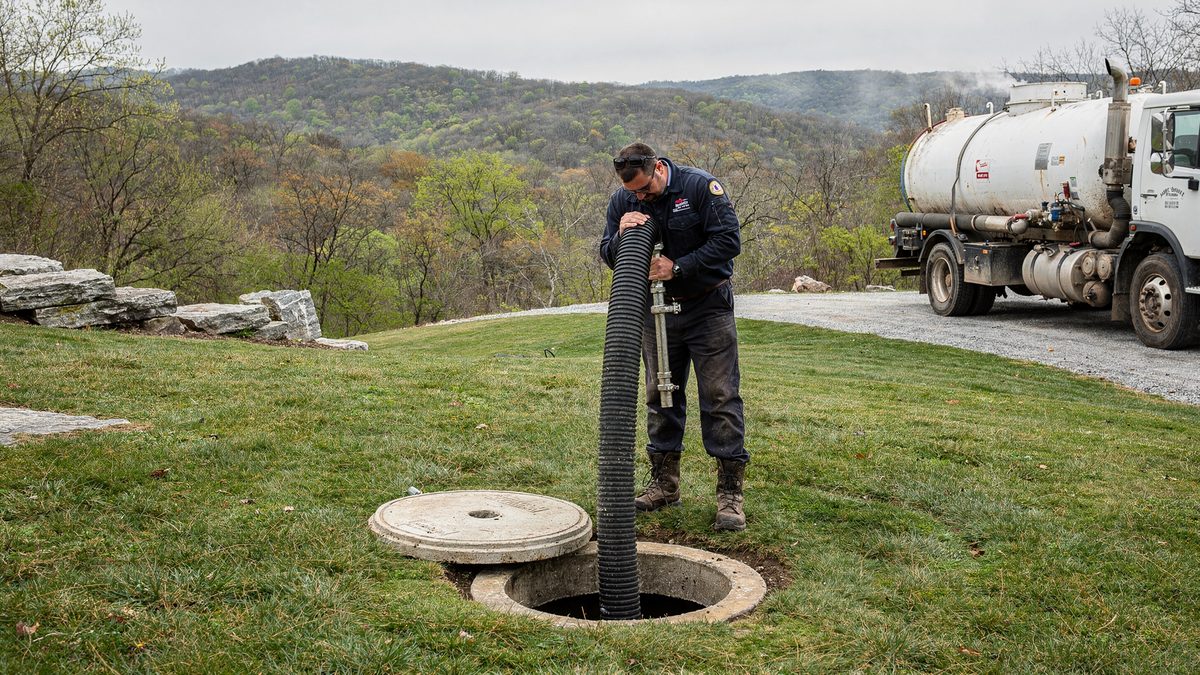
We locate and uncover the access lid, pump both compartments through the manhole rather than through the inspection ports, and check the inlet and outlet baffles while the tank is empty. On tanks that have an effluent filter, we pull and rinse it. Pumping through a four-inch inspection port leaves the sludge that matters in the tank.
Confirm any quote you take covers the manhole.
Before we backfill you get the tank size, the condition of both baffles, the sludge depth we measured, and a recommended return interval based on what came out.
Pricing and Scheduling in the Springfield Metro
Most 1,000 to 1,500 gallon residential tanks fall in the a flat rate quoted before dispatch range, set by tank size and how far the truck has to run hose. The number is quoted before we leave the yard and it does not move once we are on site unless you approve a change.
Scheduling is confirmed when you call. Two conditions add cost and we will tell you about them on the phone: a lid buried more than about a foot down, and an access point we have to dig for because no riser was installed.
Pumping Required Before Repair Work
If you are replacing or modifying any part of a system in Greene County, the county requires the tank be pumped and inspected within 72 hours before construction starts. That is a real scheduling constraint: pump too early and the clock runs out before your installer breaks ground.
We coordinate that window with installers regularly. Tell us the construction date when you book and we will set the pump to land inside it.
Schedule Septic Tank Pumping in Springfield
Flat-rate pricing quoted before the truck leaves.
Call (417) 900-3848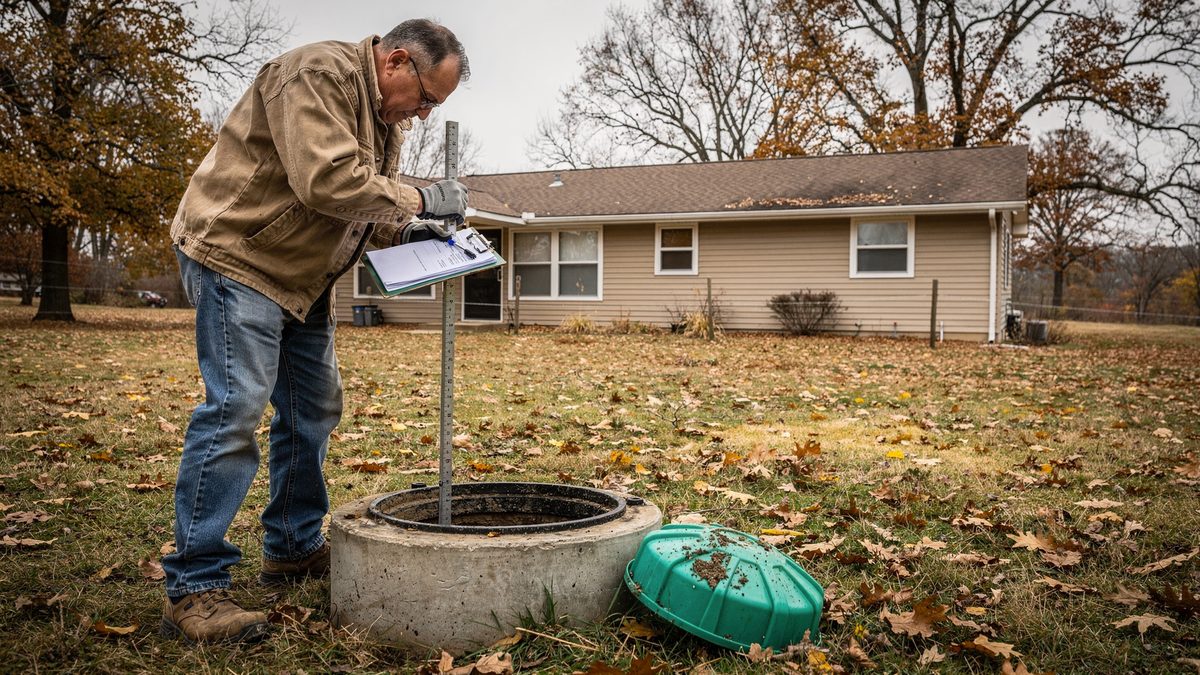
Septic Tank Pumping Available In
- Springfield, MOGreene County
- Nixa, MOChristian County
- Ozark, MOChristian County
- Republic, MOGreene and Christian County
- Willard, MOGreene County
Septic Service Questions, Answered
- How long does septic tank pumping take?
- A routine residential tank is quick once the lid is open. Locating and digging to a buried lid is what stretches a visit, which is why we ask on the phone whether you have a riser at grade.
- Do I need to be home during the pumping?
- No, as long as we can reach the tank and you have told us where it is. Most customers who are away leave a gate unlocked and get the measurements and baffle condition by phone afterward.
- What happens to the waste after it leaves my tank?
- Septage goes to a permitted receiving facility. Missouri licenses the haulers who move it, and land application is regulated separately by the Department of Natural Resources. Ask any pumper where their load is going; a licensed one will answer immediately.
- Can you pump in winter?
- Yes. Frozen ground over the lid is the complication, not the tank itself. If you know a hard freeze is coming and you are close to due, pumping in the fall is cheaper than paying to thaw and dig in January.